
Recently, I started seeing these 80s-looking pictures and clips cross my feeds. It was a weird mix of things that grabbed my attention in a digital sea of butts, boards, and videos trying to Teach Me How To Dougie in 2026, but mainly it was the name of this project that lured me in.
Akkurat Nok.
Some translate it from Danish to just enough, barely enough, or even exactly enough. I think the actual translation heavily depends on your attitude towards surfing, in which neck of the woods you’re trying to get your fix, and most importantly, when you are trying to get it. One thing is for sure: as a Nordic surfer, you deal with plenty of ’just enoughs’ to keep your stoke going.
This is what Dane Mathias Rosendal is trying to document with Akkurat Nok. And slowly but surely he is releasing bits and pieces into the wild, with a 35-to-40-minute film as the cherry on top somewhere in 2027. Perfect timing to jump on a call with him and ask him how this all came to be and where it is heading.
I know you’ve been shaping for nearly twenty years, but never for sale. Where did that start?
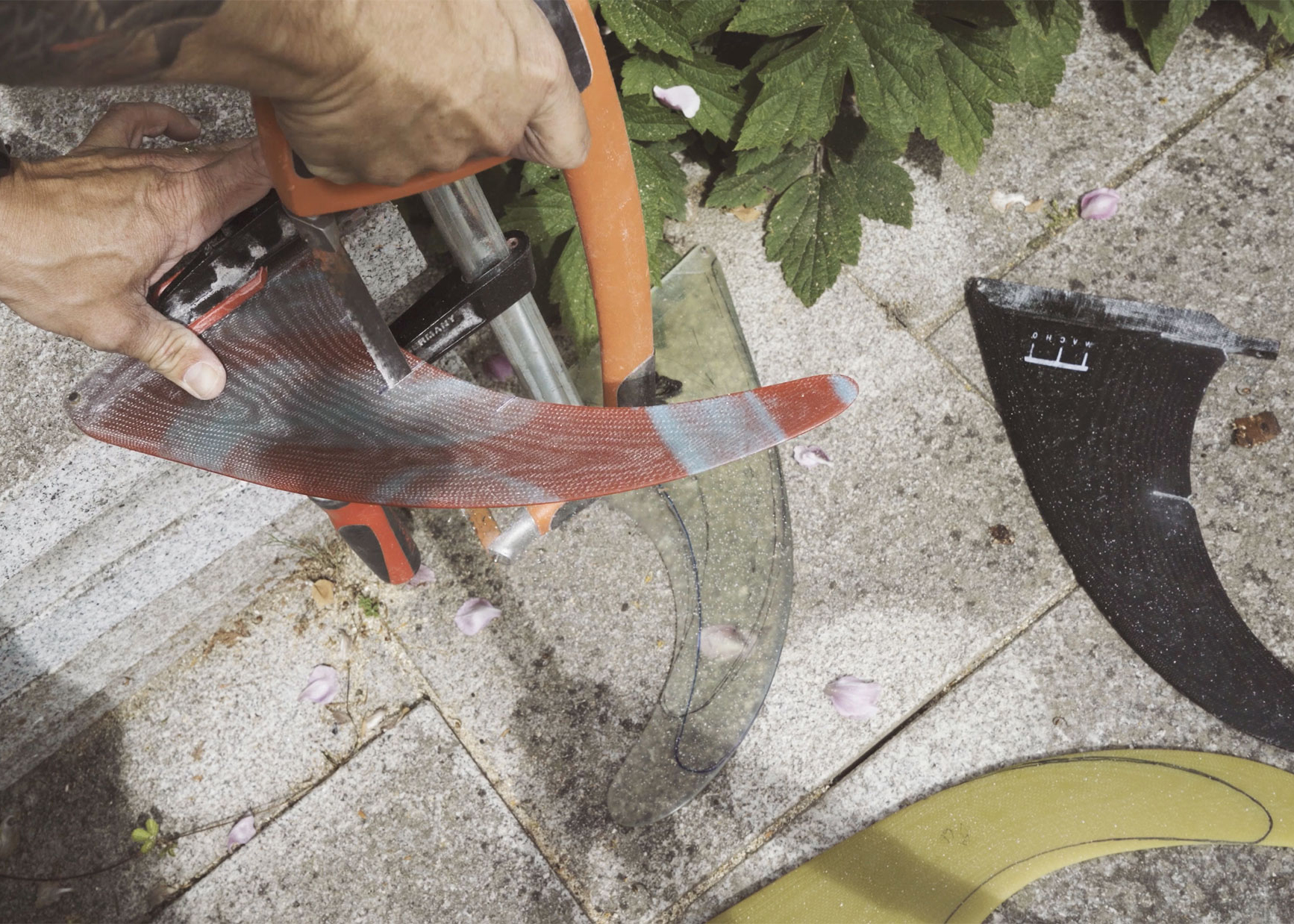
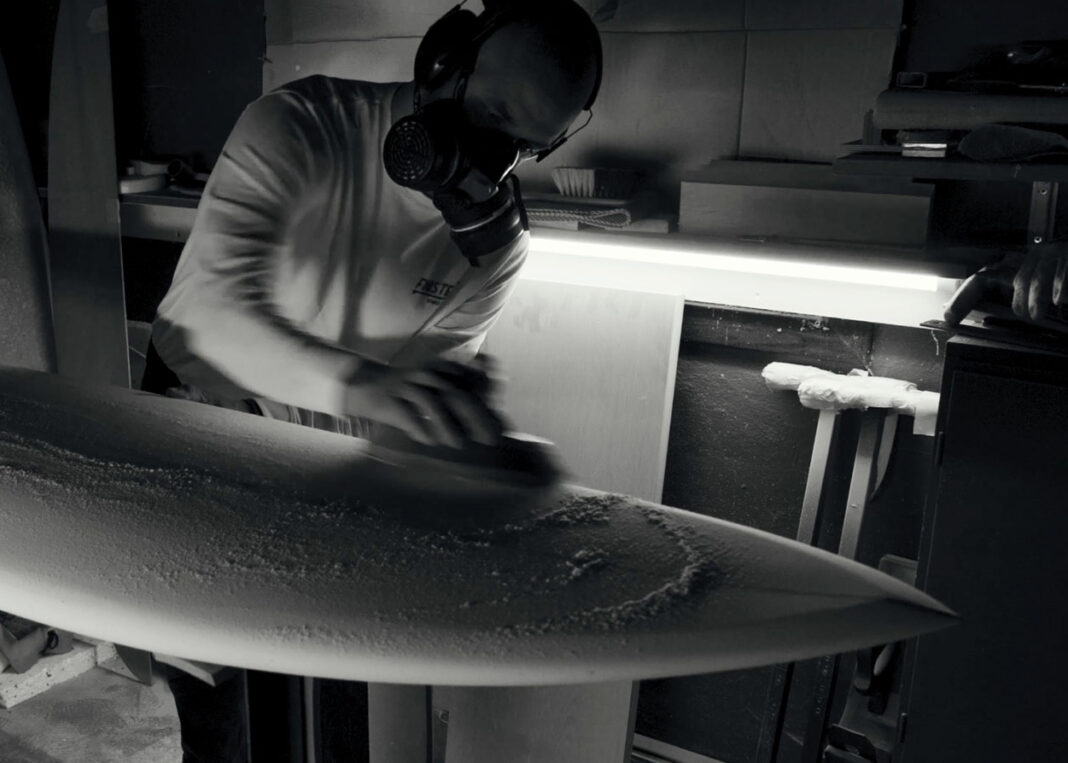
With our dad, really. He built boards back when you couldn’t buy a board in Denmark, so he taught my brother and me how to shape and how to glass. Around 2005 we got hooked on the alternative stuff—fishes, that kind of thing—and we just couldn’t access it here. So we started building our own. We were watching Seedling constantly, but we’d never seen a proper log or a single fin in real life. Only images online. So we just started experimenting. And we thought those boards would actually work for our waves, because we have weak wind waves and all that. It suited what we had.
Six years later you started Oh Dawn, with your brother and a friend.
We kind of stumbled into it. We were building boards, shooting photography, developing it ourselves in the basement. Then a small gallery that had just opened asked us to do an exhibition. So we made some boards, some skateboards, framed the photography, screen-printed some T-shirts. And everything sold in the first week. We were like, what the fuck? So we poured all the money into materials and made more stuff, and suddenly we were eyeing this opportunity that maybe we could just do this. None of us knew anything about producing clothes. But it was fun to work with a brand and have a different approach to the whole surf thing. Nowadays that’s not so different, but back then it was.
What happened with Oh Dawn?
The big mistake was that we were too interested in the visuals and the branding, and we didn’t care about being salesmen. We opened some really nice accounts all around the world. But we never wanted to drive around and visit stores and force them to buy a certain amount. If someone said, ah, we don’t know—we’d say, yeah, okay, we understand. Move on. We were three guys with the same interests. We needed some other perspectives, and someone who wanted to chase the business side.
What does your working life look like now?
I started in that direction at school and then did a top-up in branding and marketing. I’ve been doing e-commerce and digital marketing for a lot of years—actually since the Oh Dawn days, when we got a webshop and I learned how to work like that. I helped start Colorful Standard, made the logo and built the e-commerce funnel, kicked that off for the first years. Then corona hit and the sales were psycho. Four years at Libertine-Libertine after that, another Copenhagen brand. Now I’ve changed direction completely and work for an auction house—art and design and furniture.
Plus three kids and a wife. Where does a film fit?
It is a full-time job. But I always find time somehow. I find time to go surfing and make boards and film stuff. It’s just a big part of me. I can’t help it, I’m doing it anyway. So now it’s really fun to have an excuse for some of these ideas to actually come out as something.
There’s a specific quality to what you’re posting—almost eighties, a soft light on everything.
I really love that you say that, because I actively tried to remove myself from any audience targets and performance stuff. I’m trying to do this without caring how things perform. I just want to make something I find nice, something slower, where there’s more time for a visual to stand.
So what is the film, actually?
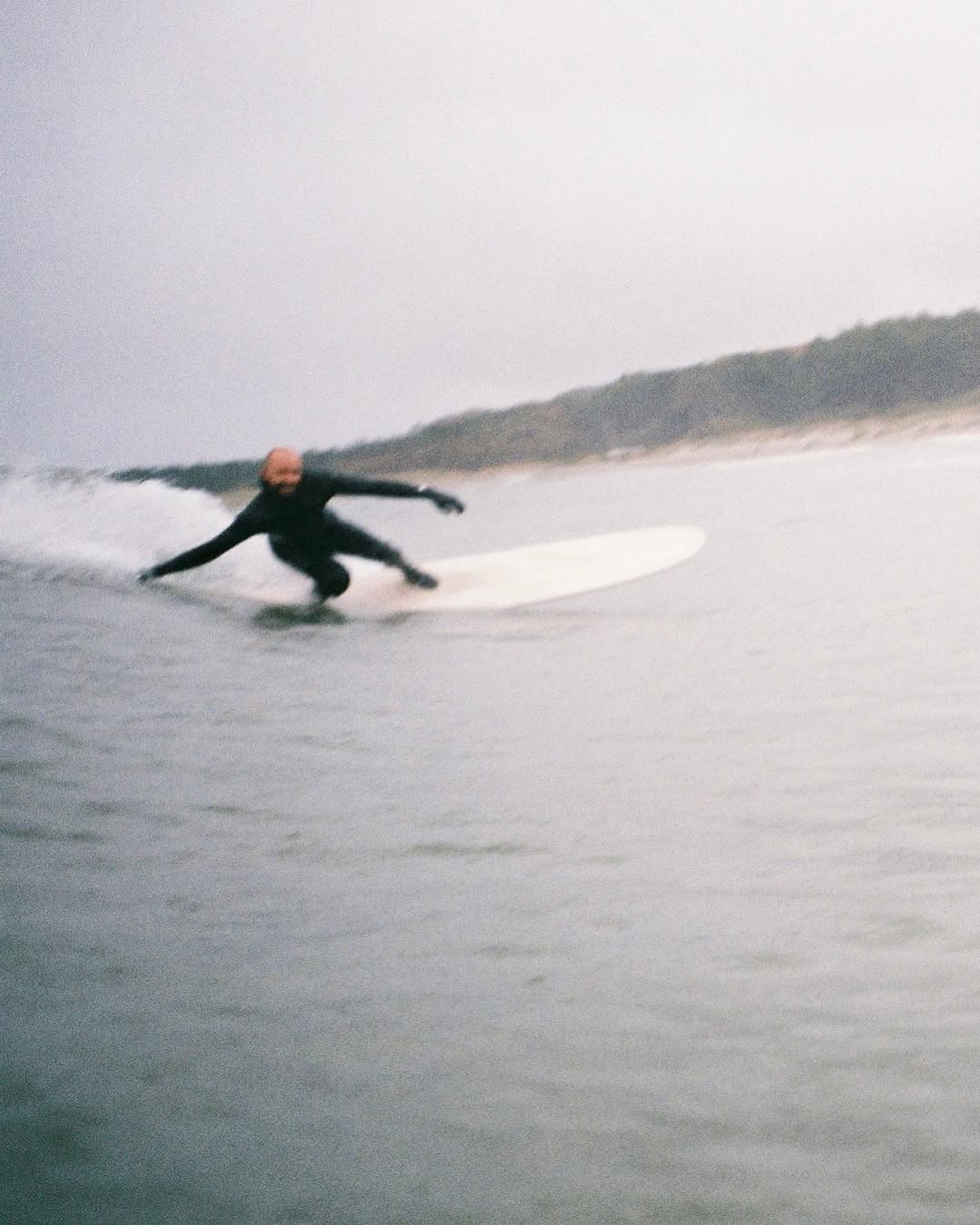
My idea has been not to do another ”surfing in an unlikely destination” edit, because there are plenty of those. And it doesn’t make sense to do a ”this is radical surfing” film in Denmark either. The interesting thing about being a surfer here, or in Scandinavia, or maybe Holland, is everything in between. What it means to be a surfer where you almost never get the conditions. You’re always forced to be optimistic, because otherwise it would be straight torture. Some people move to southern France or other obvious places to live the dream. Others stay home, accept the conditions and find joy in what’s there. It’s a matter of perspective.
It’s everything around the act of surfing. Hunting the rare good waves, finding fun in the bad ones, experimenting with board designs, chasing that feeling that’s universal no matter where you live. And I’ve always considered surfing an art form. Even in my work life I’ve had this feeling that to be really good at something you should be like a jazz musician—so skilled at your instrument that you can break free of the rules. What you leave out is just as important as what you do. Surfing is the language of the film. It’s not the main thing. The main feature shouldn’t be a good tube from the West Coast or some big snap. I’d rather have those come in as subtleties. It’s the in-between stuff, and how you approach being on that hunt forever.
I feel like surf culture worldwide is homogenising more and more, and most of it points at California.
That’s a big part of it, and it’s why I approached a brand like Finisterre for support. I want this to be a representation of how surfing is here. Not trying to replicate living in California. Of course, a big part of surfing comes from Californian culture, but I think it’s an interesting perspective to show how it slowly takes its own shape here. There have been some really nice short films and clips out of Denmark with great surfing, but I feel like it’s always about forcing the whole stereotypical surf theme onto a place where it doesn’t always fit. Take the town of Klitmøller, for example. Years and years ago they dubbed it Cold Hawaii because of the waves. A truly unique and special place that’s seen a huge increase in population from people moving there to surf. It’s a wonderful place, but I don’t think the name does it justice. It would just be nice to have something honest, that doesn’t force something else onto it and reflects what it truly is. That’s just my two cents.
Which is presumably why the narration is in Danish?
The voice is always going to be Danish, subtitled from the very get-go. I want it to feel real, and it’s so much more real than a Dane trying to speak fluent English and sound super cool and losing all the small nuances. But it needs that international appeal too.
How do you want to approach the narration?
I’ve watched Bruce Brown’s The Endless Summer a million times, and I thought: how cool would it be to have a Danish surf film with that kind of narration and that dry humour? From the outside, talking about an eighth of an inch on a board and then taking it out into shitty one-foot surf doesn’t make sense. It’s almost ridiculous. But it’s showing that the unimportant things are still super important.
Who’s in it?
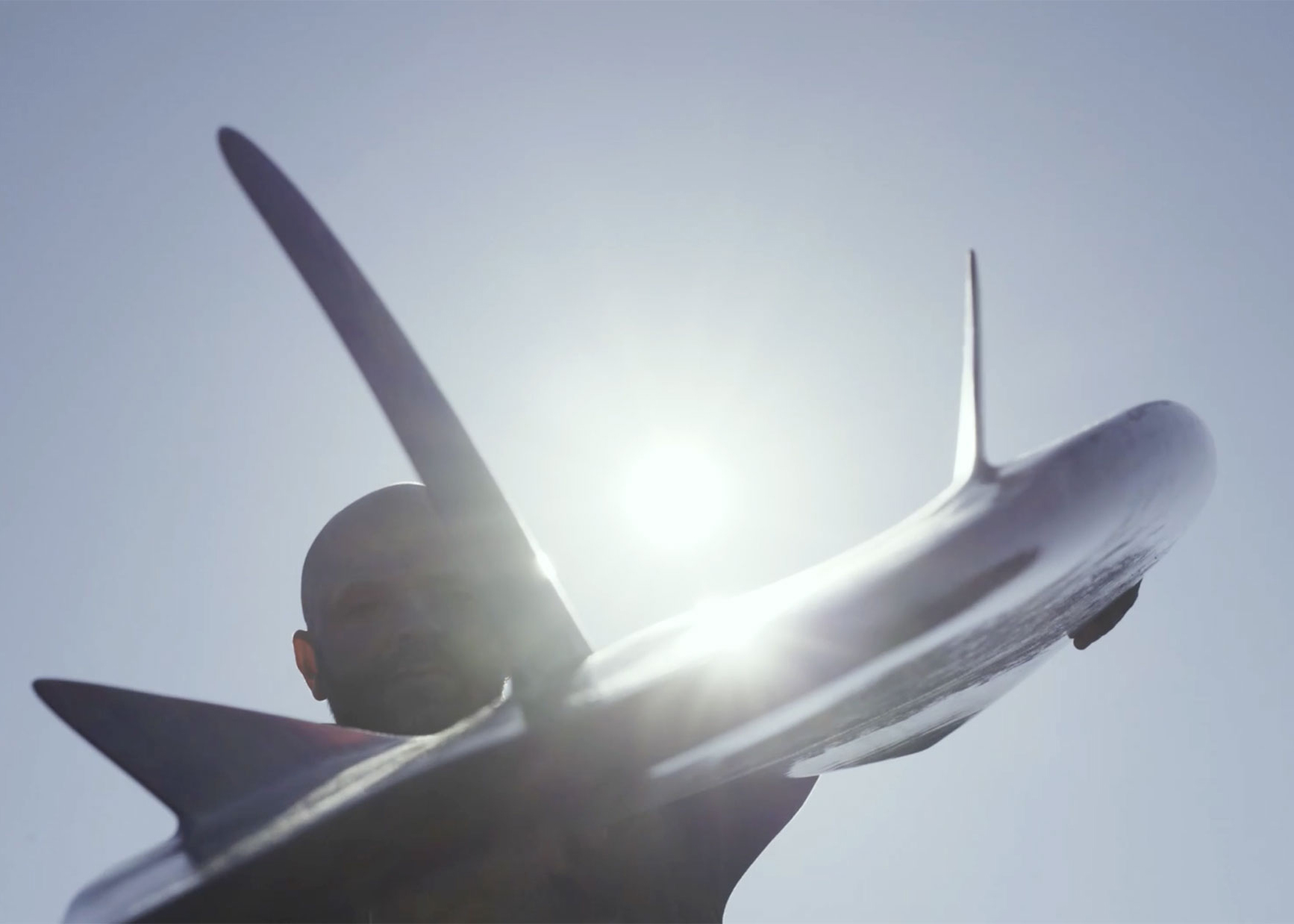
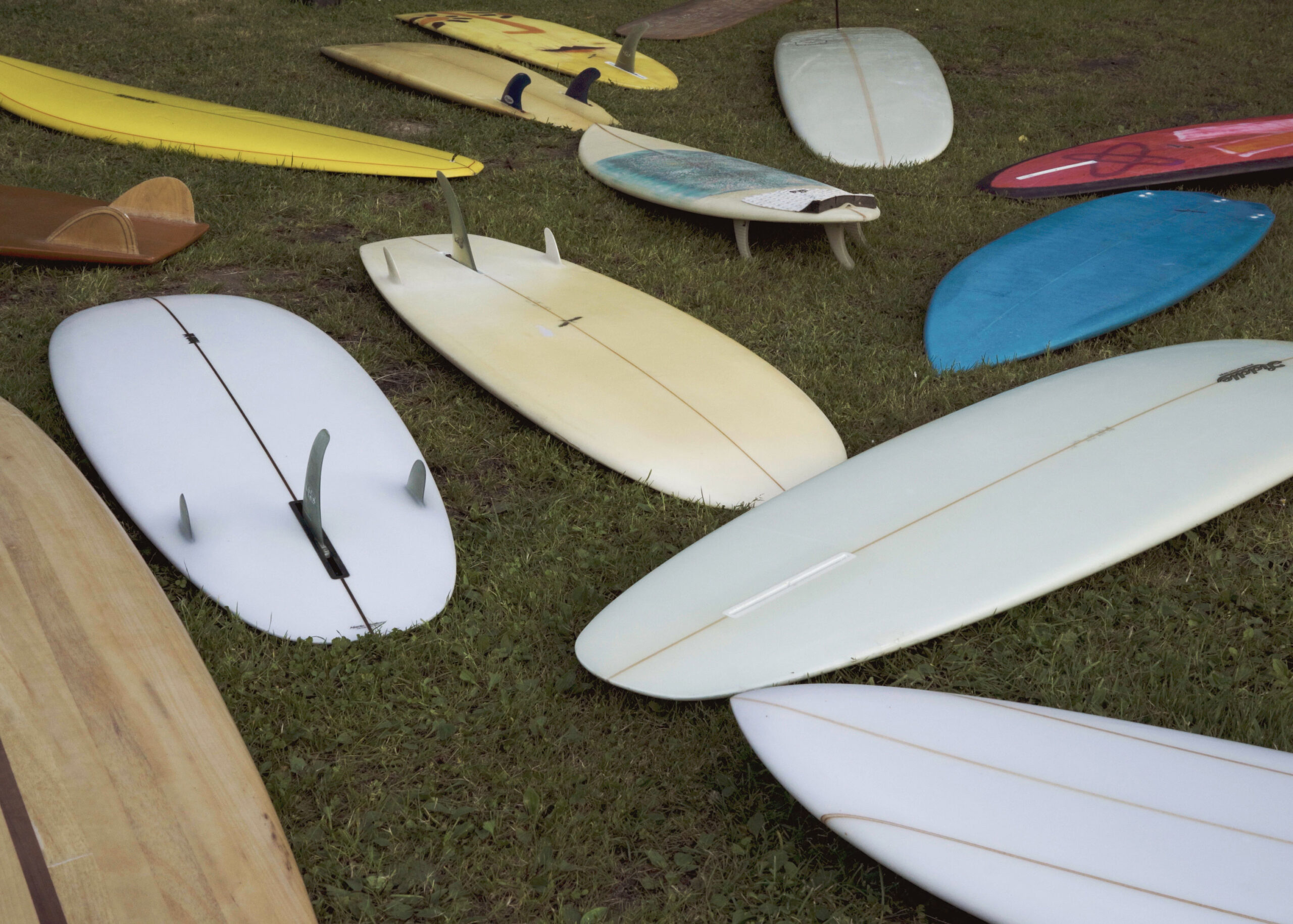
I’ve been surfing here for so many years that I know a lot of surfers. The scene is still pretty small. There’s my brother and our local friends north of Copenhagen—we mostly ride longboards and hulls. Then some of the guys on the west coast who ride shortboards—super talented surfers. I’ve also designed a few boards with a shaper from the west coast called Mor Meluka. We worked together on some experimental shapes for the film. He has his own brand and is an amazing surfer. Then, you also have my friend Oliver Hartkopp, who grew up around the corner from me but lives in Jutland now—I filmed him this summer in Sweden, really good surfing. I posted some stories from that and then other guys and girls joined. Still early in the process, so there might be more. For now I have a nice list of people who represent surfing in Denmark. Danes, people who moved here—which is amazing in itself, choosing to move to Denmark for a surfing life—and some who are just here for the seasons. Some are really technical surfers and some are just chasing the feeling, not caring about performance at all. I find that freeing.
And behind the camera?
It’s my script and my idea and I’m the one editing. But my brother and my friend Thomas help with filming, and they’re going to play some music too. It’s a joint effort at some point, though I’m the main driver. I like the thought of doing something with your friends and bringing their energy in—the list of contributors might grow as the project evolves. It’s the same as when we started Oh Dawn—we had no money, so how far can you get on good ideas? If a brand wanted to support the production I’d love that, because I want it to be good quality, good sound, nice looking. I have high expectations of myself. I’m not going to settle for less.
Tell me about the music.
Mostly jazzy, surfy, instrumental—soundscapes that fit the visuals. My brother and I grew up with a dad who played a lot of instruments, so we had drums and bass and pianos in the house. We play a bit of this and a bit of that. And Thomas, who’s in the film, is a musician. Really good. I want everything to come from our own hands, to support the feeling of it.
Is there a Danish folk tradition to draw on?
I know what you mean, but it’s really not that present anymore. There aren’t many people playing it or listening to it. The Danish scene is pretty much pop, plus some cool, more underground bands, but nothing that’s really unique to Denmark. It’s much stronger if you go to the UK, or France, or even Germany, I think.
This is your first proper film, right?
I’ve done a lot of smaller projects and shot a lot of photography, but never a proper film. I’m aiming for thirty-five, forty minutes. That’s a fun challenge, but it also takes that time to tell it in the right tone of voice, so it doesn’t turn into a fast web edit. I want the pace to be slow.
And once it’s finished?
I’ve talked to Finisterre about support, and I think there’ll be opportunities for screenings and some festival submissions through them. I’d like to do screenings with shops around Scandinavia, because it’s a community thing. Then distribute it through a website where people can watch it. And a limited run of small printed zines, the first four hundred or so, with images and some info on the boards.
When does it land?
Ideally spring, hopefully before summer. But I don’t want to lock myself into that deadline yet—realistically somewhere between summer and autumn 2027. A big part of it is having all the seasons: the summers, the winters, ice on the wetsuits, the rough weather. If everything goes my way it’ll be done faster. We’ll see.
By Ron de Leeuw / NSM