Imagine your favorite wave in the world. The one that you used to scribble down in your notebook during math class. A wave that you could mind surf for hours.
Now, where is this wave located? Do you need a wetsuit? Is it even trunkable? Or could you surf it nude if you wanted to?
Who are you surfing with? Your friends and family? Strangers? Or alone?
What are the conditions like? Is it a glassy morning? slightly offshore while the sun is setting? Or a tropical rain session?
What is the setup like? Is it a peaky sand bottom beach break? Or a point break peeling gently over a perfect (but not too sharp) reef? Or, is it a slab, throwing a thick lip over a shallow lava-rock bottom?
What are you imagining?
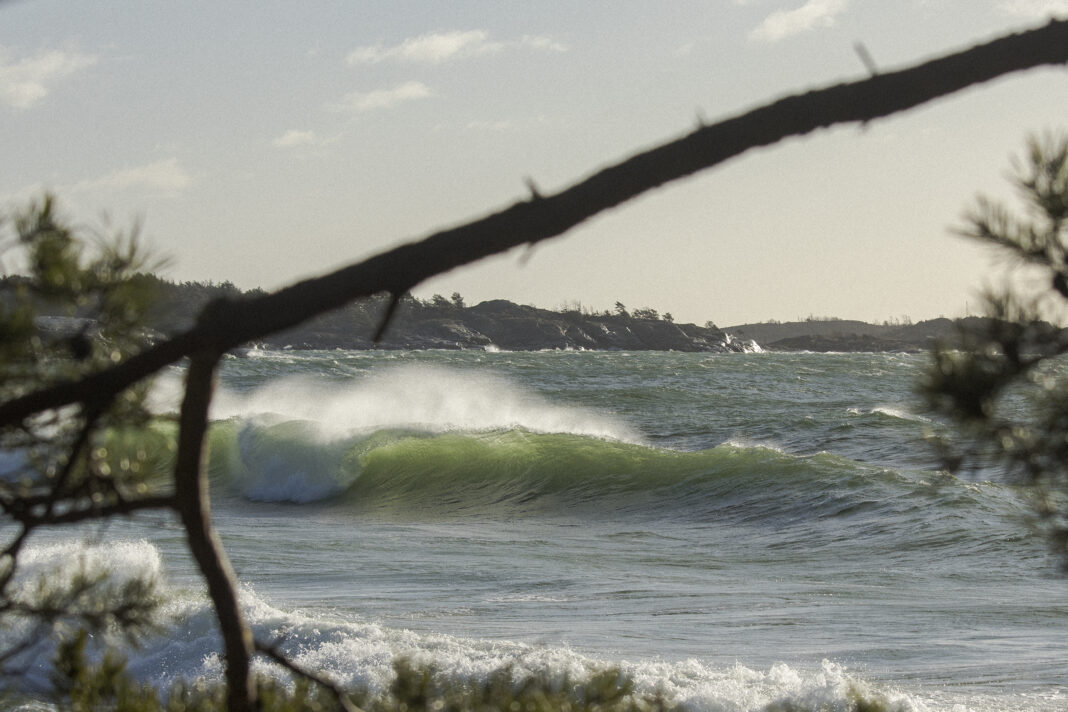
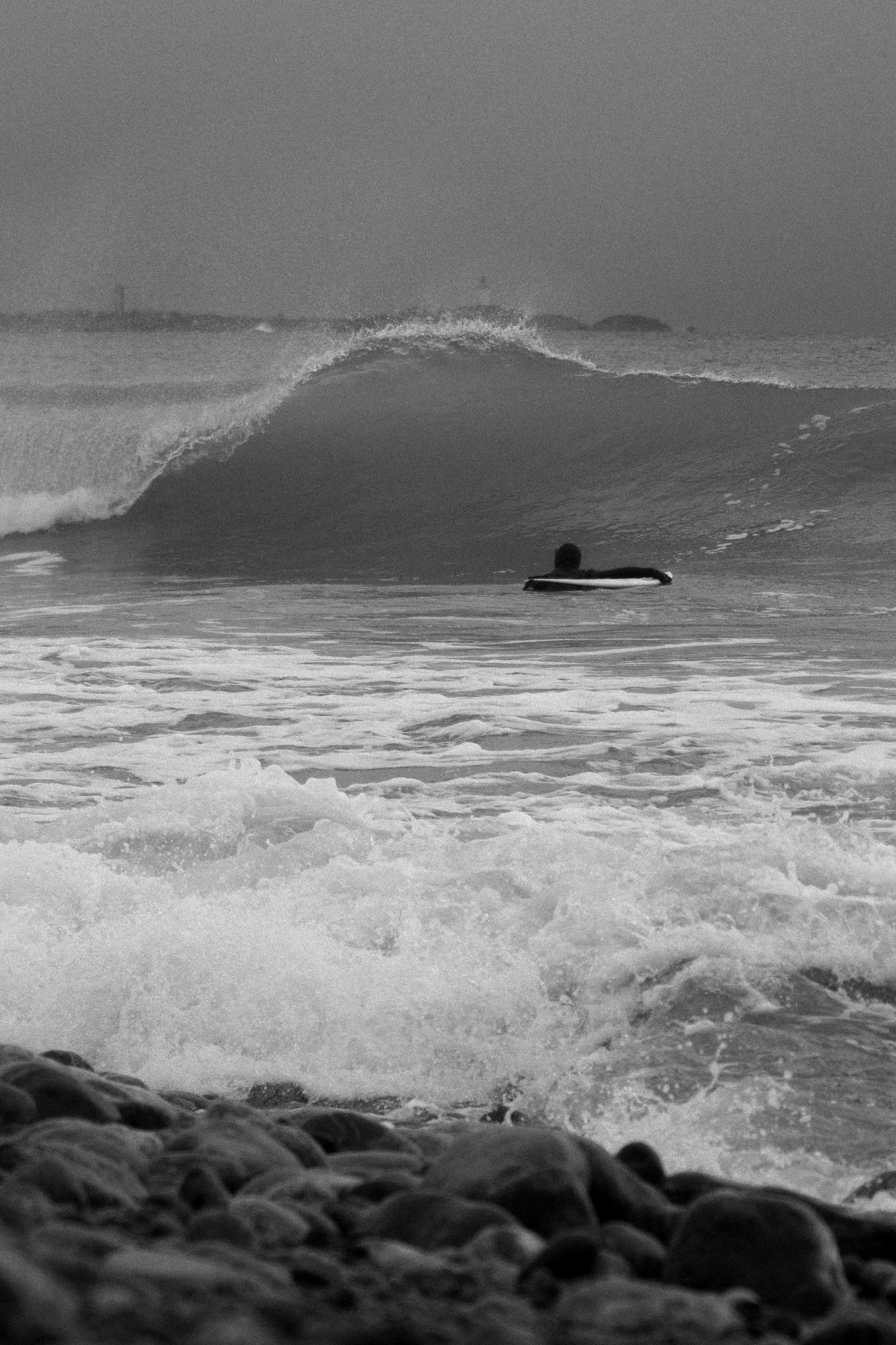
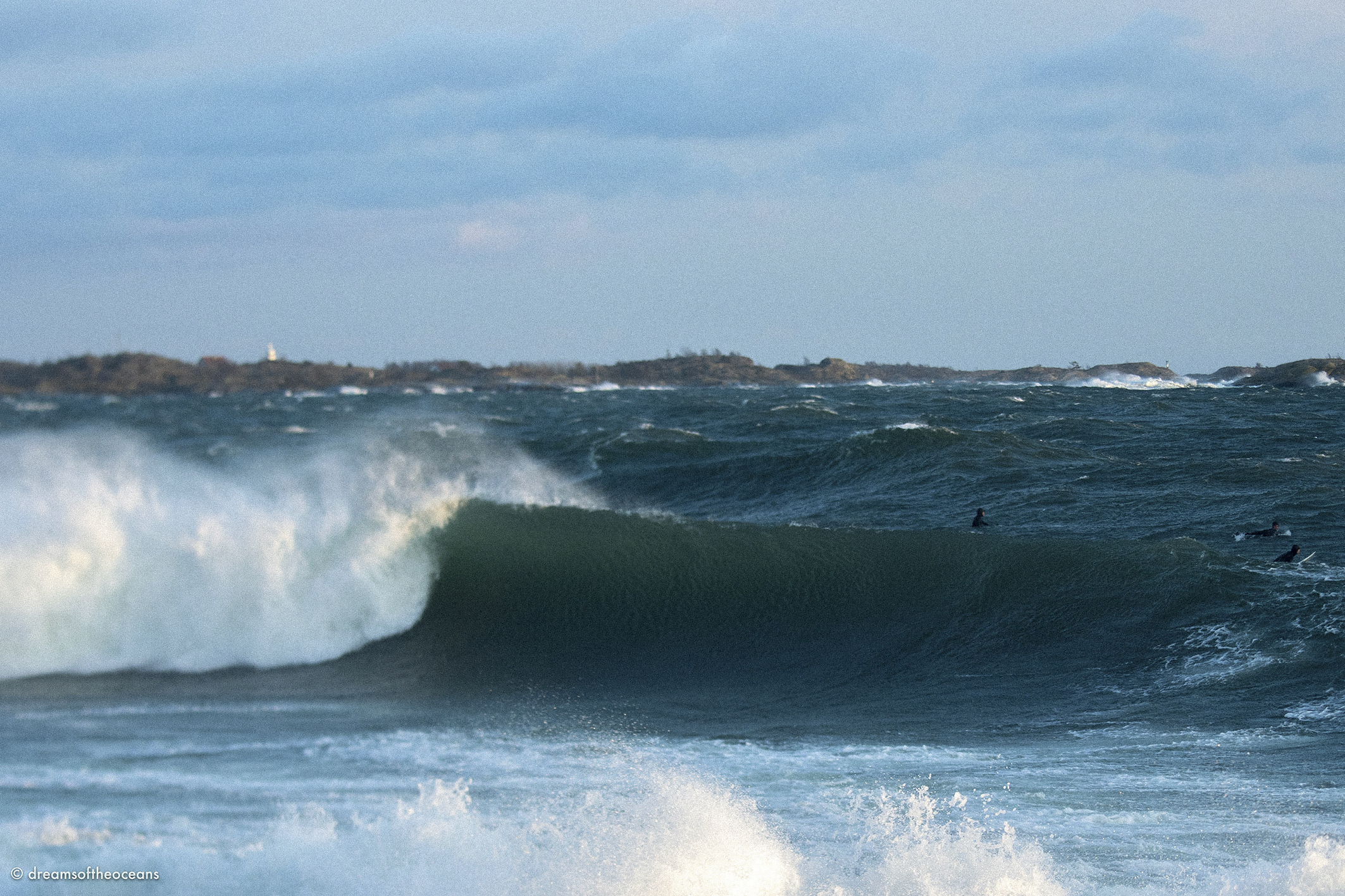
I can tell you that you are with most certainty not thinking of the waves at Torö. If you were, you are either a liar or you don’t like good waves, and that’s ok. An hour’s drive south from Stockholm you will find one of the most novel surf spots in Scandinavia. The famous pebble beach of Torö. Why is it novel you ask? Well, it just is.
Torö has for long been the go-to surf spot for many surfers living in the Stockholm region. As most surfers travel for at least an hour to surf, it is hard to call any surfers “locals”. However, if there is swell, there are more than a dozen faces that you are more than likely going to see at Torö, either in the parking lot or out in the surf.
The nationally famous pebble beach is one of the few beaches (that is accessible by car) that faces an undisturbed view of the baltic horizon, allowing wind swell from SSW to SE to hit the shore. Since the Swedish surfing pioneers started to surf the spot in the early 80s, Torö has seen many faces and changes. Gladly some things about the spot will never change. – The drive down will never get shorter. – You will always hit a red light at the bridge. – The oak forest at the end of the road will always look magical, no matter what time of the year. – You always get reminded of how tremendously fun surfing is, and you wish you lived somewhere warmer and more wave frequent after a trip down to Torö.
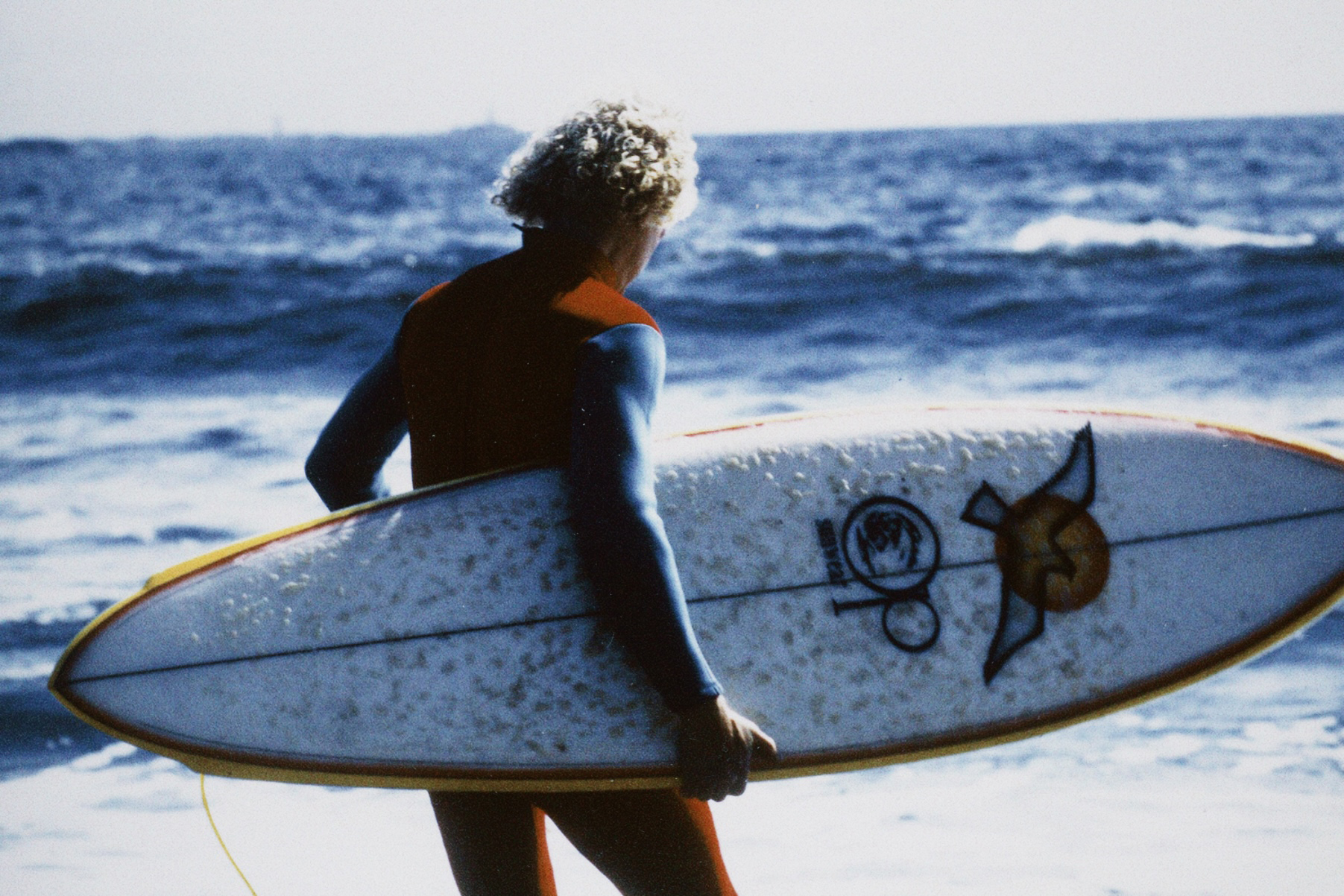
One surfer that has seen Torö change since the 80s is Jan Ekstedt.
Jan is one of the first surfers who ever surfed at Torö. Before fancy forecast apps, social media, or crowds.
Jan Ekstedt at Torö in the 80s. Pic courtesy of Jan.
“You had a hard time even finding someone that wanted to tag along for a surf. I used to call the lighthouse at Landsort, in order to know if it blew down there at all. You didn’t have the same technology as you have today when it comes to the internet for finding things. There were many times that you would drive down for nothing when you thought it would be good. But not many people were doing it back then.”
Do you remember anything from your first surf at Torö? “Hehe no. No, I can’t say that. There are some old pictures of that. But in the beginning, when you were there, the waves were quite small compared to in recent years. It can get quite big. But that was nothing I experienced, that there were big waves right when I started, it was something that eventually came.”
Describe your experience surfing at Torö “It’s pretty messy. It is a quick decision to catch a wave at Torö. The big waves further out are usually worse. It is better if you can stay a little further inside. When you have managed to time it with days when the low pressure has passed and you’re right in the eye of the storm, and the waves have corrected themselves, and it has maybe started to blow a little from the side or even a little offshore, then it can be incredibly good.”
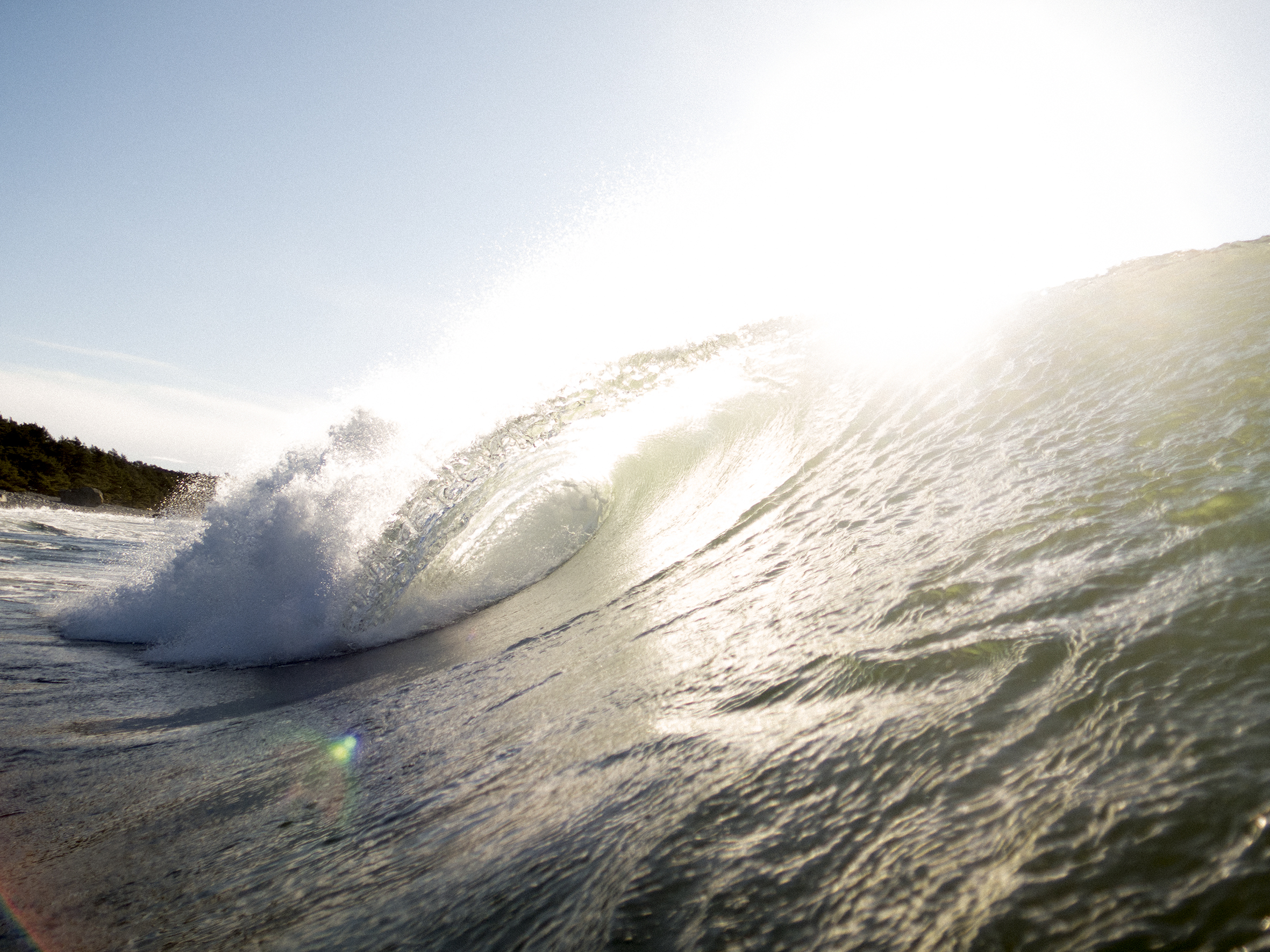
Pic by Axel Cooper Williams
“I’ve seen pictures of Torö when it has turned on, “No that is not Torö. That is somewhere else.” And then you find out that it actually was Torö. It’s awesome, and I just congratulate those who have managed to time it. Which is easier today maybe than it was in the ‘80s.”
Torö is located in the Baltic Sea. A small and shallow sea, with an average depth of 55 meters. Compared to the Mediterranean sea that has an average depth of 1500 meters, and the Indian Ocean with an average depth of 4000 meters, the Baltic Sea is a puddle. The waves in the Baltic do not have the luxury of building and forming themselves far away from shore and organizing themselves in time to generate smooth surfable waves. Instead we have surf generated by nearby storms, that more often than not hit shore at the same time as the waves do. So what does this mean? When surfing in the Baltic you can expect wind. A lot of it.
The waves at Torö are however typically weak and sloppy. The winds are usually howling onshore and strangely enough, it’s always crowded nowadays. The bottom is hard but not sharp. Getting in and out of the water is always awkward due to the round and slippery rocks. If you surf during the winter months you can expect the water to be around 1-5 degrees celsius. Local surfers are overjoyed if there are surfable waves just a couple of hours a week. (And this is during our “good” season.) In other words. Surfing at Torö during the winter months is always tough. The weather is cold. The wait for wind and waves is always longer than you want it to be, and when the swell eventually turns up it’s always windy and more often than not rainy. The pebble beach at Torö has always been magical in many ways, from the beautiful nature to the friendly people that you meet. But it has never been for the quality of the waves.
However, this winter has been different. It feels like we have had more surf days than ever before. The winds have blown strongly in the right direction to generate waves, then turned around to a side/offshore direction multiple times, producing exquisite, fun-to-surf waves. The sun has been brighter, the people have been friendlier and the waves have improved. That’s right. The actual shape of the wave has improved.
Before we go deep into why and how the shape of the waves has changed. Let’s look at some quick facts about the setup at Torö