NobodySurf – A talk with founder Hideyuki Okada by Ronald de Leeuw
NobodySurf is one of the biggest curated surf video platforms today. Undoubtedly, you’ve seen a clip or two hit your screens at some point.
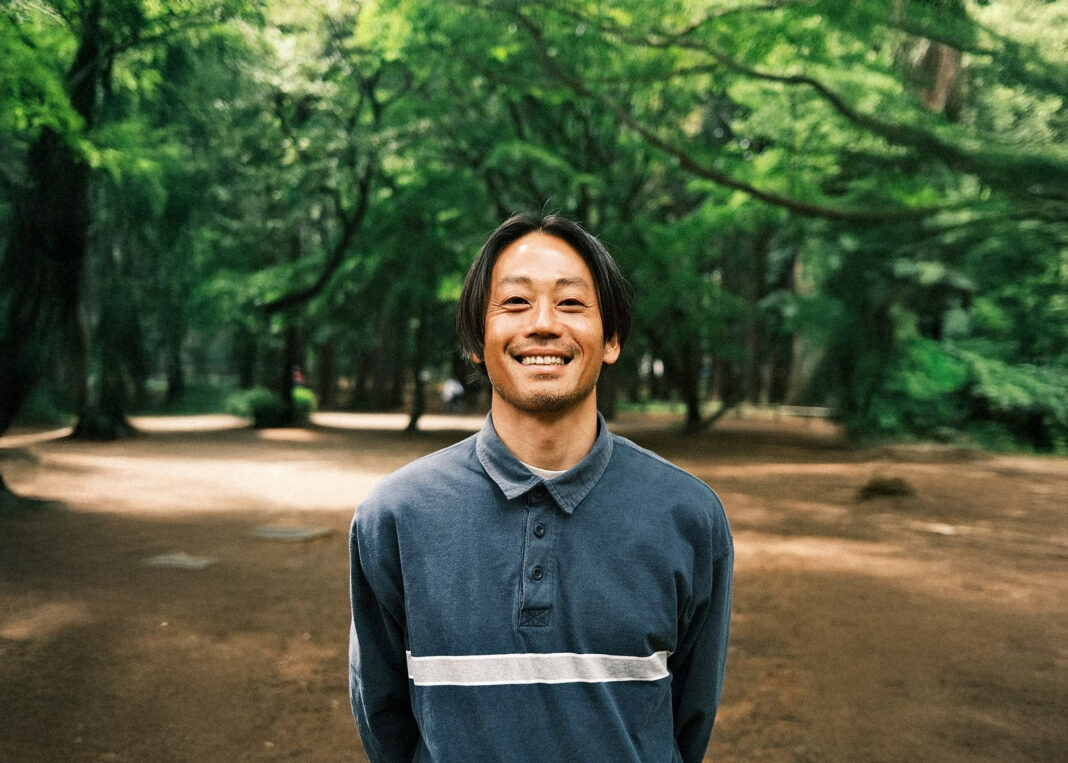
I had the opportunity to have a talk with founder Hideyuki Okada (46) a little while ago. We covered the origin story of both Yuki and NobodySurf, and where it’s all heading. Reading this article, you can be a fly on the wall of our two-hour-or-so conversation on June 17th of 2025.
Internet and web developments have altered surfing, culture, and how we perceive it—albeit a different way than the introduction of leashes and fins of course.
Being hyper-connected through internet has opened and closed doors within surfing. New opportunities arise, older business models perish—a circle of life. Adapt or die.
Video surf platforms aren’t necessarily new, and NobodySurf also isn’t the only one out there. However, they have been steadily growing, offering a platform for both (aspiring) filmmakers and surfers alike. What Yuki and his small team do is fascinating to say the least.
Ron: Hey Yuki, how’s it going?
Yuki: Good, good. Thank you so much for having me.
Ron: Yeah, of course. You can’t imagine how stoked I am to be able to talk to you — for so many reasons. I’ve been a surf journalist for ten years now, and working in surf media is… well, you know. It’s not easy to make a living doing this.
Yuki: Exactly.
Ron: I think you’re doing something really smart with NobodySurf. I also really like what Brian’s doing with Log Rap, even though it’s very different from your approach. There’s something interesting happening in how you both curate and create. I honestly think it’s one of the most contemporary ways to deal with surf media as it stands today. You’re seeing through the noise, through the old frameworks — and you’re building something that feels like a response to it all.
Yuki: Thank you so much. That means a lot. I was surprised when you mentioned the article you wrote — I really liked it. And thanks for referencing NobodySurf in it. That was super meaningful.
Ron: It was part of a follow-up piece on the article I wrote in response to Sean Doherty’s article in Surfing World, about the end of “big surf” — the collapse of the classic surf brands. My angle was: of course this happened. The entire industry was built on something that couldn’t survive Web 2.0 and the wave that followed. So much of what we know in surf culture was shaped by the structure of the internet. And NobodySurf — the way you approach things — it felt like such a smart, natural evolution of that.
Yuki: I really relate to that. I’ve lived through those shifts myself — especially the transition from old tech to mobile, from old surf media to social curation. I’ve always been fascinated by tech.
Actually, before I became an Apple guy, I was a total Sony maniac.
Ron: Really?
Yuki: Oh yeah. When I was a kid, I was obsessed with Japanese electronics. Sony, Walkmans, game consoles — all of that stuff. Sony was making such cool things in the ’80s and ’90s. I loved their designs, their vibe. I was always saving up to buy their gear.
Then in university, I got my first Mac. I still remember it — Mac G3. Around the same time, the iPod and iTunes came out. I started ripping my CDs and putting “a thousand songs in my pocket.” It blew my mind. I fell in love with the Apple ecosystem. It just felt… right.
Ron: What did you study?
Yuki: I went to Keio University in Japan. It was a pretty new department called “Faculty of Environment and Information Studies” — very experimental. A mix of IT, economics, art, and media studies. I studied 3D computer graphics. But honestly, I wasn’t the best student. I was more into experimenting with what was next. This was 1997 — we didn’t even have broadband yet in Japan. But my university had a 10 Mbps line, which was insane back then.
That’s where I first really got inspired by what the internet could be.
Ron: Where did you grow up exactly?
Yuki: It’s a bit of a weird path. I was born in France, actually. My dad’s job took us there. We lived in Paris for five years, then moved back to Japan. Then, when I was ten, we moved to France again — second time — and stayed another three and a half years. I went to an American school in Paris.
Paris really shaped a lot of who I am. But also, moving around gave me an identity crisis. I didn’t even know the word “identity” at the time, but I was always feeling a bit “between.” Not fully Japanese, not fully French, not fully anything. But one thing that helped me bridge that gap was tech — Japanese products. People were always curious about what I brought to school. I had the smallest Walkman, or the newest device, and it became a kind of icebreaker. That stuff mattered.
Ron: So when did skating and surfing come into play?
Yuki: Skating came first. I started in Paris when I was ten or eleven. I’d buy Thrasher magazine at this one bookstore that carried US publications. I loved Santa Cruz, Powell Peralta Rat Bones Wheels, Independent Trucks, Swiss Bearings — all that stuff. I even convinced my dad to send a check in US dollars to a skate shop in America so I could order a complete deck through mail order. The shop was called “Skully Bros.” It was so analog — but it worked. That was my first real setup.
Ron: Life before the internet. Really something else.
Yuki: Yeah, and those graphics really stuck with me. That aesthetic — the boards, the art — it’s still with me.
Ron: and surfing?
Yuki: Several years after I moved back to Japan. I was about 16. A friend of mine from skating also surfed. He invited me to try it. But I lived in Tokyo, didn’t have a car, and you can’t drive until you’re 18 here. So we’d take the train to Kugenuma, Shonan. I only surfed a few times in high school.
Later, when I started university and moved out to Shonan, I could surf more. But the big shift came in my early 20s, when I got sent to San Diego for a six-month business trip. I didn’t even know it was such a surf town. But once I was there I surfed every morning. Wake up at 5am, surf for two hours, work from 9 to 6, drink a beer at night watching MTV, repeat.
Ron: The dream.
Yuki: Yeah. And the culture — it shocked me. People were so friendly in the lineup. Strangers would smile or say hi. There were families out there. I once saw a grandmother, a dad, and his kids all surfing the same break. I’d never seen anything like that in Japan. And the boards — it wasn’t just shortboards. It was fish, longboards, logs. I didn’t even know the fish was invented in San Diego [Steve Liz, 1967] until much later.
Ron: I think that’s a global thing. Close to anyone and their grandma went through that “thruster era” from like 1990 to 2005. Everything had to be performance shortboarding.
Yuki: Exactly. That was the media narrative. It shaped how we all thought surfing “should” look. I was caught in it too.
Ron: So you come back from San Diego, more hooked on surfing than ever, and you’re still working in tech?
Yuki: Yeah. I was working at a company called Itochu Corporation — a big trading firm in Japan, over 150 years old. They had business in everything from convenience stores to textiles to energy. I was in the tech department, where we invested in U.S. startups and brought their services to Japan. Later, I worked at Excite Japan, a web media company which was a subsidiary of Itochu back then.
That’s where I started experimenting with iPhone apps. This was when iPhone 3G had just launched in Japan. I was obsessed with Apple, so I basically recruited a bunch of designers and engineers internally, people who also loved Apple, and we just started building apps in-house — unofficially at first. It was like this little secret project. Eventually, it became an official department and I became the manager.
Ron: But you left it all in 2014?
Yuki: Yeah. After six years at the subsidiary, I had to go back to the parent company. They assigned me to a massive M&A project — like $200 million. A dream project, technically. But I knew right away: I didn’t want this. I didn’t want to manage spreadsheets and due diligence teams. I wanted to build things that touched real users.
That same week, I decided to quit.
Ron: That must’ve been scary.
Yuki: Totally. But my boss was supportive. He said: take time to figure it out, and prepare. So I did. I left in July, founded my own company in September 2014, and gave myself three months to explore.
Ron: Did you already have the idea for NobodySurf then?
Yuki: No. All I had was a vague goal: build a mobile internet service that could be used globally. That was it. No theme, no topic.
So I started watching a lot of online videos. Back then, YouTube wasn’t the go-to for quality surf films. But on Vimeo, I started discovering all these short, artistic surf edits — beautifully made, but almost nobody had seen them. Some had only 100 views.
And I thought, how is this possible? There are, what, 30 million surfers in the world? Why is this film, which clearly has heart and craft, sitting unseen?
Ron: A distribution problem.
Yuki: Exactly. It wasn’t that the films weren’t good. It’s that nobody could find them. And the internet is supposed to solve that — matching people to content. So I decided: okay, what if I just start curating them?
Ron: So that’s what you did?
Yuki: Yeah. I built a very simple website. Started all the social media accounts that existed back then, including Instagram. I didn’t make a business plan. I just wanted to see if I could connect these films to an audience. I called it “NobodySurf” — kind of a joke between my friends and me. When we find a lineup with no one out, we say “nobody surf.” It’s like a dream state. I wanted the website to feel like that. You find a little gem, nobody around, just pure stoke.
Ron: That’s such a beautiful origin story.
Yuki: Thank you. In the beginning, I didn’t tell anyone. Not even friends or ex-colleagues. It just looked like a hobby. And in many ways, it was. But I treated it seriously. I asked filmmakers for permission. I credited everyone. We posted trailers, gave shoutouts, linked back to Vimeo or YouTube. I wanted to do justice to their work.
Ron: When did you realize it was working?
Yuki: A few months in, people started responding, especially the film creators. Filmers in Australia, France, US, and several other countries appreciated what I was doing, although we were very small. I felt the exchange of passion, no matter where you live. We were growing slowly, but steadily. Our aim was international from the start. After running it for about a year, I remember someone messaged me and said, “I started making surf films because of NobodySurf.” That was huge. That’s when I realized this wasn’t just curation. It was inspiration.
Ron: And it grew fast after that?
Yuki: Organically. No hockey-stick growth. By the end of 2015, we had 150,000 Facebook followers and 6,000 on Instagram. A year later, 300,000 on Facebook, 42,000 on Instagram. Today, both platforms have over 600,000 followers each.
Ron: All from zero?
Yuki: From zero. All grassroots. Because people shared the content. We always tagged everyone — filmmaker, surfer, musician, location [*only when acceptable, hot girls don’t geo-tag]. People shared it because they were credited. That helped grow the ecosystem naturally. It’s like… the MTV of surf video, but decentralized.
Ron: And you never monetized the creators?
Yuki: Never. We don’t charge creators, surfers, or independent brands. It’s a mutual relationship, built on trust. We help promote their work. In return, they let us feature it.
Ron: How did you survive financially during that first year?
Yuki: Just savings. It was hard. My wife works too, but we already had two kids back then. I couldn’t pay myself a salary. I had to act like I was doing okay — even though I was just pouring everything into this idea. Looking back, I probably should have taken on a side job, but I was so committed.
Ron: That must’ve taken a lot of faith from your family.
Yuki: It did. My wife is amazing. So supportive. And my boss at my old job — he also gave me space to leave on my own terms. I was very lucky.
Ron: And today, are you still running it full-time?
Yuki: Yes, but it’s still tough. We’re not a big company. We were lucky to have several investors supporting us in our early years, but at the moment, it’s just me and several friends helping me part-time with the engineering, design, and operations. I also do consulting for other companies on social media strategy to keep things going.
Ron: So what’s the vision for the future?
Yuki: I don’t want to monetize the surf community. I want to bring in outside money — from tourism boards, hotels, car brands, airlines, and global lifestyle brands. We’ve done some projects already, like with the Ministry of Tourism in El Salvador. We created an original film with them, featuring Brian Pérez, a local surf hero. It performed really well.
Ron: And that’s the model — you create media that serves both surfers and the brands?
Yuki: Exactly. We want to work with outside sponsors and collaborate with filmmakers and surf brands to create a series of high-quality surf content —short films, travel stories, cultural pieces. It should benefit everyone: the surfer, the filmmaker, the sponsor, the viewer.
Ron: Sounds like a win-win.
Yuki: That’s the goal. I’ve spent ten years building trust with this community. I never took money from them. I never sold them out. And now, we’re in a position to scale this—in the right way.