“IT’S CALLED A DEERSTALKER, YOU DICK!” Peter chuckled after I mockingly asked him why he looked like Sherlock Holmes. He has his back turned towards me, a brim facing each way. In the boat, we’re accompanied by a black Lab called Eilidh. Her snout looks like she was testing wares that came in fresh from a Colombian bush plane. On his Deerstalker, Peter has a green bow, a pin of the Scottish flag, and a variety of colorful Flies. Tucked into it, a pair of Oakleys that look like he nicked them off of Edgar Davids after a foul in the penalty area.
I estimate him well in his Sixties; I’m loaded at 50% of that. He’s still running The Green Highlander. Partly to pay off his ex-wife, but mostly for the love of it. I should be the one paddling, but he was having none of that. It keeps him virile, I guess. It made me feel like I’m Darla from The Little Rascals, minus the umbrella. Just Gore Tex to keep me dry, unfortunately the old kind.
It’s late August 2023, and it’s four seasons in a day. Vivaldi on overdrive. Hidden well up in the Scottish Highlands, we’re at Loch Migdale fly fishing for brown trout.
As with anything new, I over-romanticized what to expect. In my head I was already whipping away and catching a fat 10KG salmon on each double haul I cast. Alas, if only it were that easy.
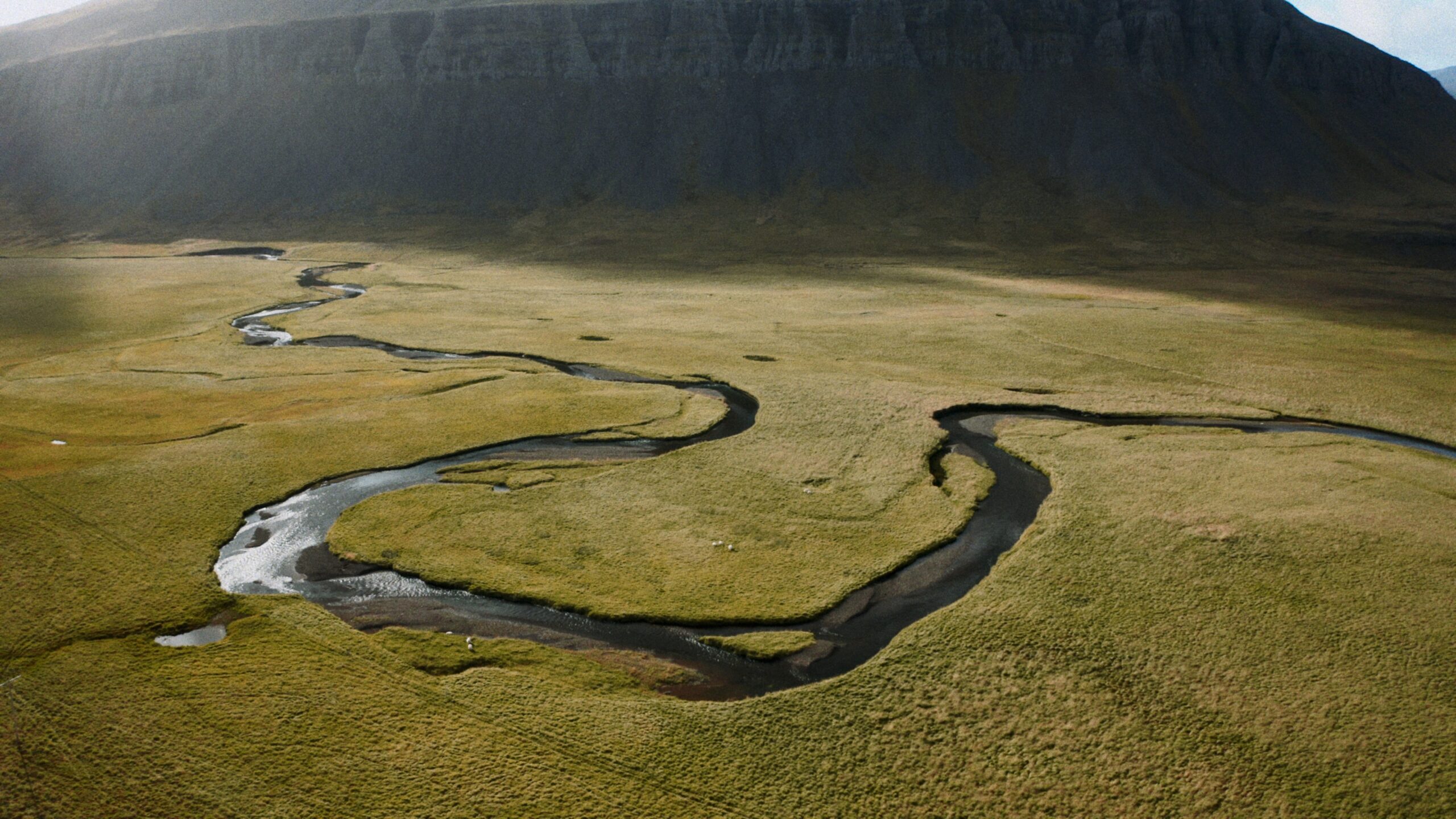
It was only then and there when I learned about the potential fate of wild salmon. Global warming, pollution, increased predation, and, to a lesser degree, habitat loss have decimated the wild population in these Scottish waters. So, even if we could fish for salmon, it would only be ‘catch and release’. “DON’T BE SURPRISED IF THEY BECOME EXTINCT PRETTY SOON,” Peter scoffed. He’s an activist without the official job title. A thorn in the side; calling for a greener environment, healthier waters, and advocating for Scottish independence.
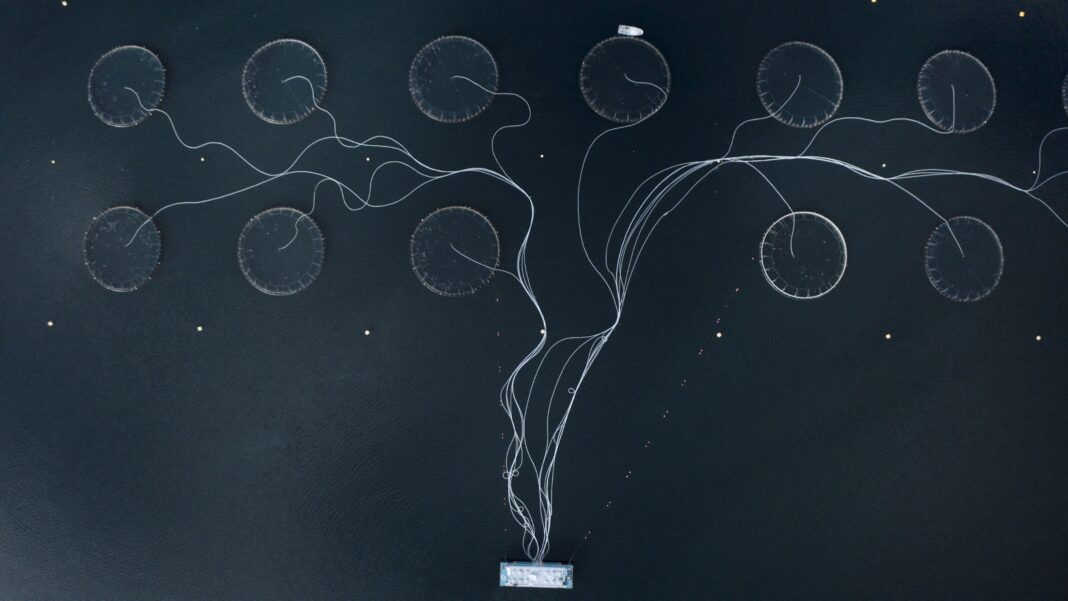
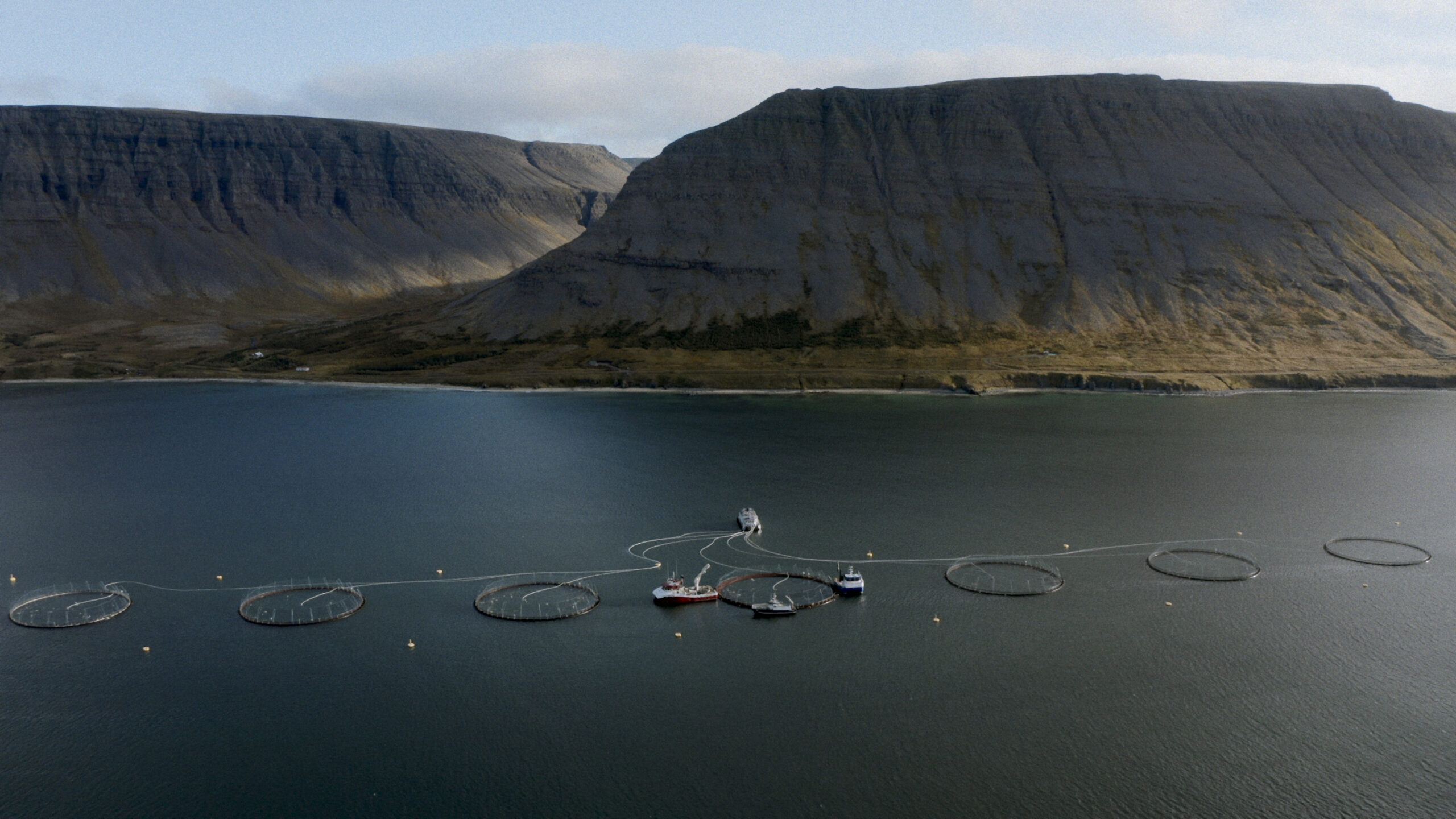
This salmon pen runs a bit deeper though. In April of 2025, I—alongside a whole bunch of other journalists and creatives—was invited to Iceland by Patagonia to learn more about open-net salmon farming and its effects on wild salmon populations. For the last six years, Patagonia has been supporting grassroots activists and NGOs across the globe to raise awareness and resistance to open-net salmon farming, which has been wreaking havoc from Canada, Scotland, Norway, and Ireland, to the Faroe Islands and even Chile.
CUBES OF DEATH AND BLEACH
Up until the 50s to 70s, Iceland was quite an impoverished nation. Adaptation and resilience; keywords to its survival. The Icelanders simply had to when living under such harsh conditions.
Icelanders celebrate this heritage during a mid-winter festival called fiorrablótl. One way of paying homage to that legacy is by eating Hákarl—fermented Greenland shark. This shark is capable of growing over five meters in length, weighing more than 775KG, and blowing out 400 candles on its birthday cake.
Their flesh is toxic, yet considered a delicacy to some. Just dig a hole, toss in the meat, press it down with sand and heavy stones, and let it rot in the cold earth for a month or three. After all of this, you will still have to let it hang and dry out for up to four months in a dedicated hut, only to cut it up into smaller dices of beige, almost translucent, meat. All you have to do then is plant an Icelandic cocktail-stick flag into it and wash it down with a swig of Brennivín.
All of this is part of fiorramatur, a collection of traditional Icelandic foods eaten as a tribute to that old Icelandic culture. Ingrained memories of the many piercing storms, Nordic isolation, and the need to sustain your family. Eating it is an ode. However, it also isn’t on the daily Icelandic dinner table, maybe because Hákarl tastes like death and bleach to most, even to the locals; an acquired taste to say the least.
It’s clear that the Icelanders are tough as nails because of traditions like these; built for survival. Though warm and welcoming, you can still feel that when interacting with them today.
Still image from A Salmon Nation film, courtesy of Patagonia.
AUTONOMY OR GREED?
World War II and its full independence from Denmark from 1944 on, has given Iceland the autonomy to grow into a more prosperous nation. It’s undeniable that the fishing industry has played a large role in the nation’s accumulated welfare—especially when Iceland expanded its Exclusive Economic Zone by 200 nautical miles halfway through the seventies. Which culminated the cod wars with the UK, gaining more control over its waters, and paving the way for the country’s fishing industry; cod, haddock, mackerel, herring, and yes, farmed salmon. Iceland has about 400.000 citizens, of which a little over 60% live in the Capital region. These more densely populated areas thrive mostly on tourism and finance. Other places, like the Eastfjords and Westfjords, are still hardcore fishing regions.
The late eighties saw a surge in land-based salmon farming, driven by high market prices. These land pens utilized pumped seawater, often heated with geothermal energy, to create the ‘best’ nursing conditions for the salmon. However, as salmon prices declined and operational costs remained high, many of these aquacultures became economically unviable and were phased out.
“THE SALMON FARMING INDUSTRY THAT WENT BANKRUPT IN THE EARLY NINETIES WAS ALREADY EXPERIMENTING ON A MUCH SMALLER SCALE WITH OPEN-NET PENS COMPARED TO TODAY. BACK THEN, IT HAD SALMON FROM ICELANDIC ORIGIN. EARLY THIS CENTURY, ICELANDIC BUSINESSMEN STARTED TO SECURE LIMITED LICENSES ON SUPPLY FOR LARGE-SCALE OPEN-NET SALMON FARMING IN DESIGNATED AREAS IN THE EASTFJORDS AND WESTFJORDS. THIS TIME, THE FARMED SALMON WAS OF NORWEGIAN ORIGIN—A “DOMESTICATED” FAST-GROWING ANIMAL. SINCE THESE LICENSES CAN’T BE SOLD DIRECTLY, THEY SOLD THEIR SHARES IN THE COMPANIES THAT HOLD THESE LICENSES, THUS OPENING THE DOOR TO NORWEGIAN SALMON FARMING COMPANIES FROM 2014 ON” Jón Kaldal (Iceland Wildlife Fund) pointed out sharply when we were discussing the industry’s timeline about two weeks after my return from Iceland.
The total Icelandic workforce, active in the aquaculture industry, seems to be less than 0.5%. However, the percentage of people currently relying on this industry is about 4,6% in the Eastfjords and 12.6% in the Westfjords. That is, if you extrapolate while accounting for an average household size of 2.5 people and include contractors, part-time, and seasonal workers.
Still image from A Salmon Nation film, courtesy of Patagonia.
Regionally in the Westfjords, open-net salmon farming is good for about 20% of the GDP, while on a national level, it’s only 0.4% of the total gross national income. This much lower number is most likely due to significant profits leaving Iceland because most of these open-net salmon farming companies are foreign-owned.
If you’d ask a random person in the Westfjords what they think about the open-net salmon industry, only about 20% would say they’re not okay with it. Although, according to a fairly recent Gallup poll from 2024, about 65% of the total nation is opposed to open-net salmon farming.
The disparity in this country surely doesn’t make it easy to govern on this topic, especially when big money is involved throughout all layers of Icelandic life.
Open-net salmon farming is a global, multi-billion-euro industry. Although the industry is much smaller in Iceland than in Norway, the total export did more than tenfold in the last ten years or so. Currently, open-net farmed salmon is the second biggest exported fish after cod. These practices have turned this fish into the chicken of the sea. And it’s not without consequence.
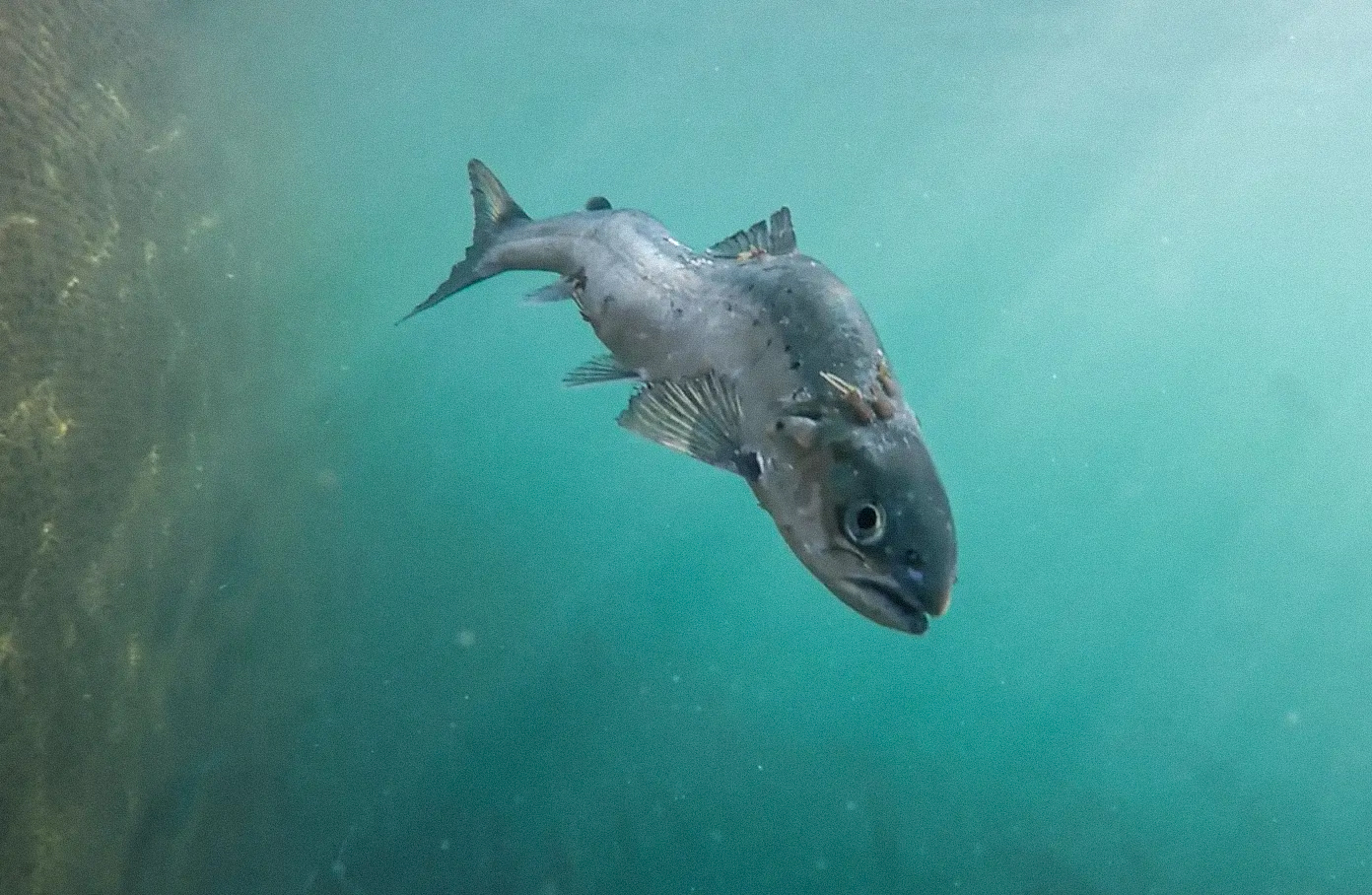
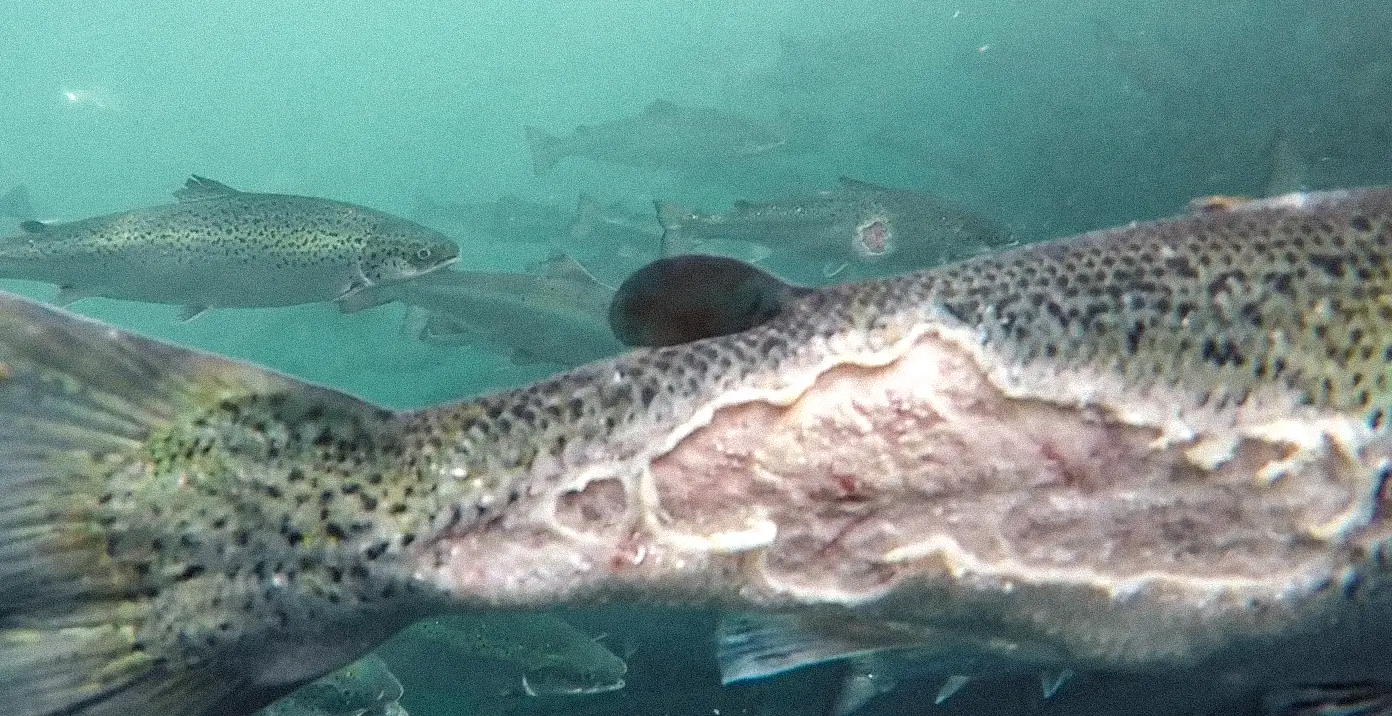
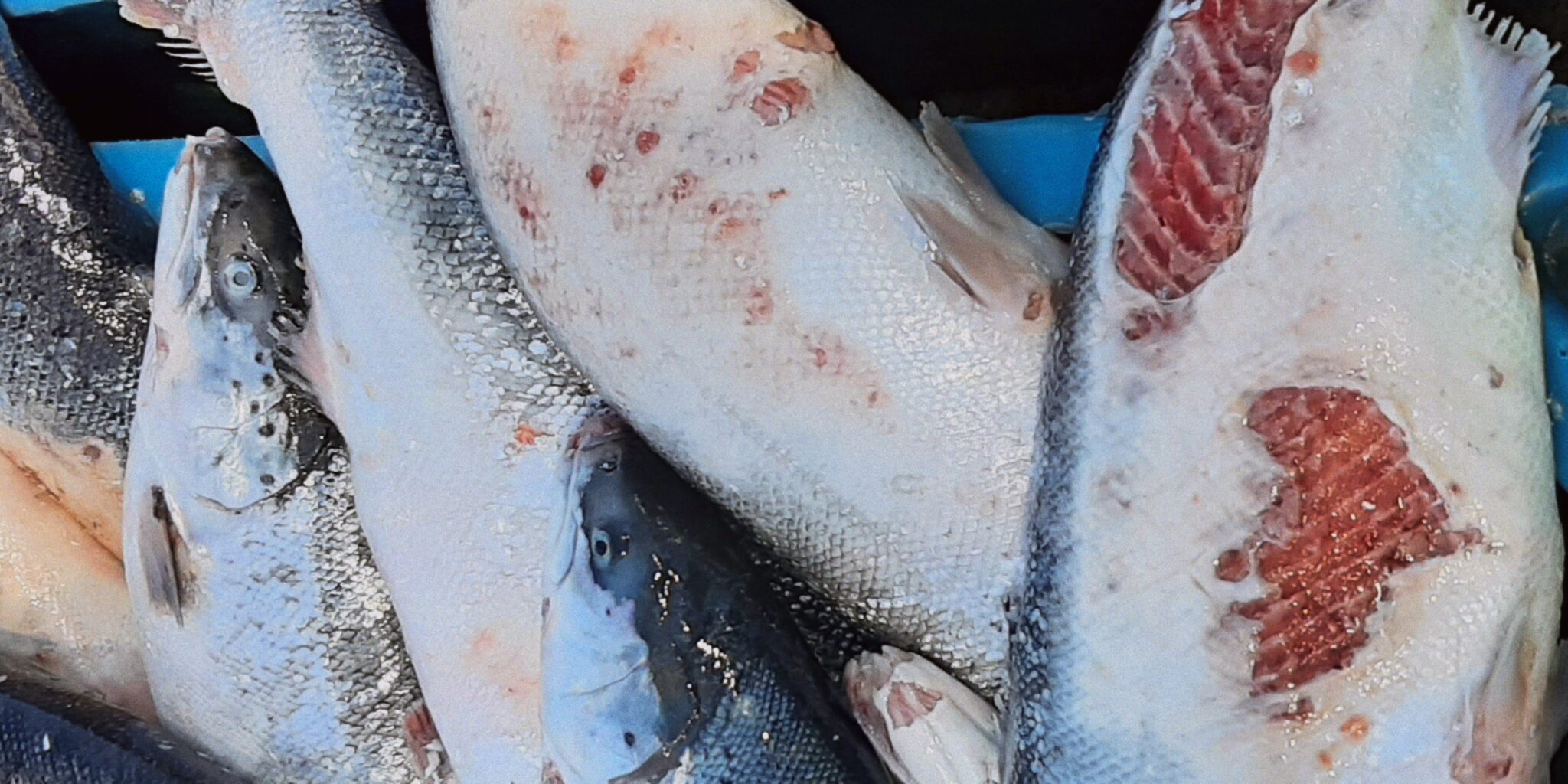
“SEA LICE, DEFORMITIES, COUNTLESS FARMED SALMON DEAD, AND POLLUTION FROM ORGANIC WASTE AND PESTICIDES, TO NAME A FEW, BUT MOSTLY THE THREAT OF LARGE-SCALE ESCAPES AND INTERBREEDING WITH WILD SALMON—ALTERING THEIR GENOME AND MESSING UP THEIR EVOLUTIONARY ADAPTATION—IS WHAT’S THREATENING WILD SALMON IN ICELAND TODAY” Jón expressed seriously during one of the talks at Patagonia’s Surf Impact Camp.
Still, it’s a booming business, led mostly by those Norwegian companies. So, it’ll keep on going until Icelandic waters are so polluted, that these companies have to abandon them and start somewhere fresh. Sure, if your business is well-established in smaller rural communities, I can understand that the locals back your endeavors, but it’s also a short-term solution to a generations-long existential problem.
Photo by John & Jane Doe via SeaLegacyPhoto by John & Jane Doe via SeaLegacyStill image from A Salmon Nation film, courtesy of Patagonia.
“PROFITS AREN’T BASED ON ANYTHING LIKE THE REAL WORLD. NATURE IS CARRYING OUT ALL KINDS OF SERVICES VITAL TO THE HEALTH OF OUR PLANET WITHOUT ACKNOWLEDGMENT OR CARE, AND THE CONSEQUENCES ARE DEVASTATING. WHEN WILL THIS ROME FALL?” is what Nordic Surfers Mag’s very own Ian Bennett said when we were talking about my visit to Iceland. And his logic makes sense.
This industry just doesn’t seem sustainable.
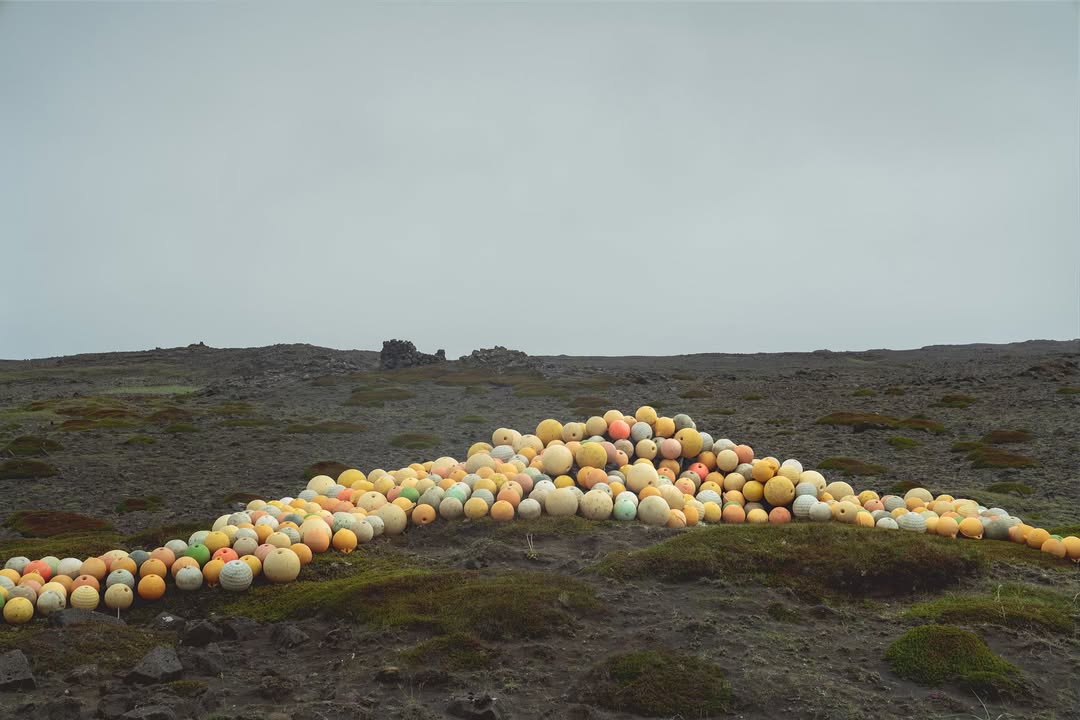
“THE NORWEGIANS CAN THINK, LOOK, AND WORK DECADES AHEAD. WE DON’T SEEM TO HAVE THAT MENTALITY. WE HAD GENERATIONS THAT LIVED A DAY TO DAY EXISTENCE, DEALING WITH VERY TEMPERAMENTAL WEATHER, AND NATURE,” Elli Thor Magnusson told me right before we parted ways.“TO ME, IT’S JUST PECULIAR THAT ICELAND TAKES SO MUCH PRIDE IN ITS CONNECTION WITH RAW NATURE, AND THEN DOESN’T REALLY OWN UP TO IT.” You might know Elli Thor from his stunning work as a surf photographer, but he does much more than that. He’s a first generation surfer in Iceland with 25 years under his belt, and well-involved in creating a better tomorrow for Iceland—sometimes in very artistic ways. His Boltaland project, for example, perfectly showcases this almost paradoxical dichotomy of what’s up in Iceland in terms of heritage and accountability. By collecting hundreds of plastic fishing floats and placing them en masse in natural scenes, Elli Thor’s photos confront you with a powerful sense of unease, but more than anything, leaves you with a feeling of hope that nature will prevail.
Photo by Elli Thor Magnusson
R.I.P. THORLI
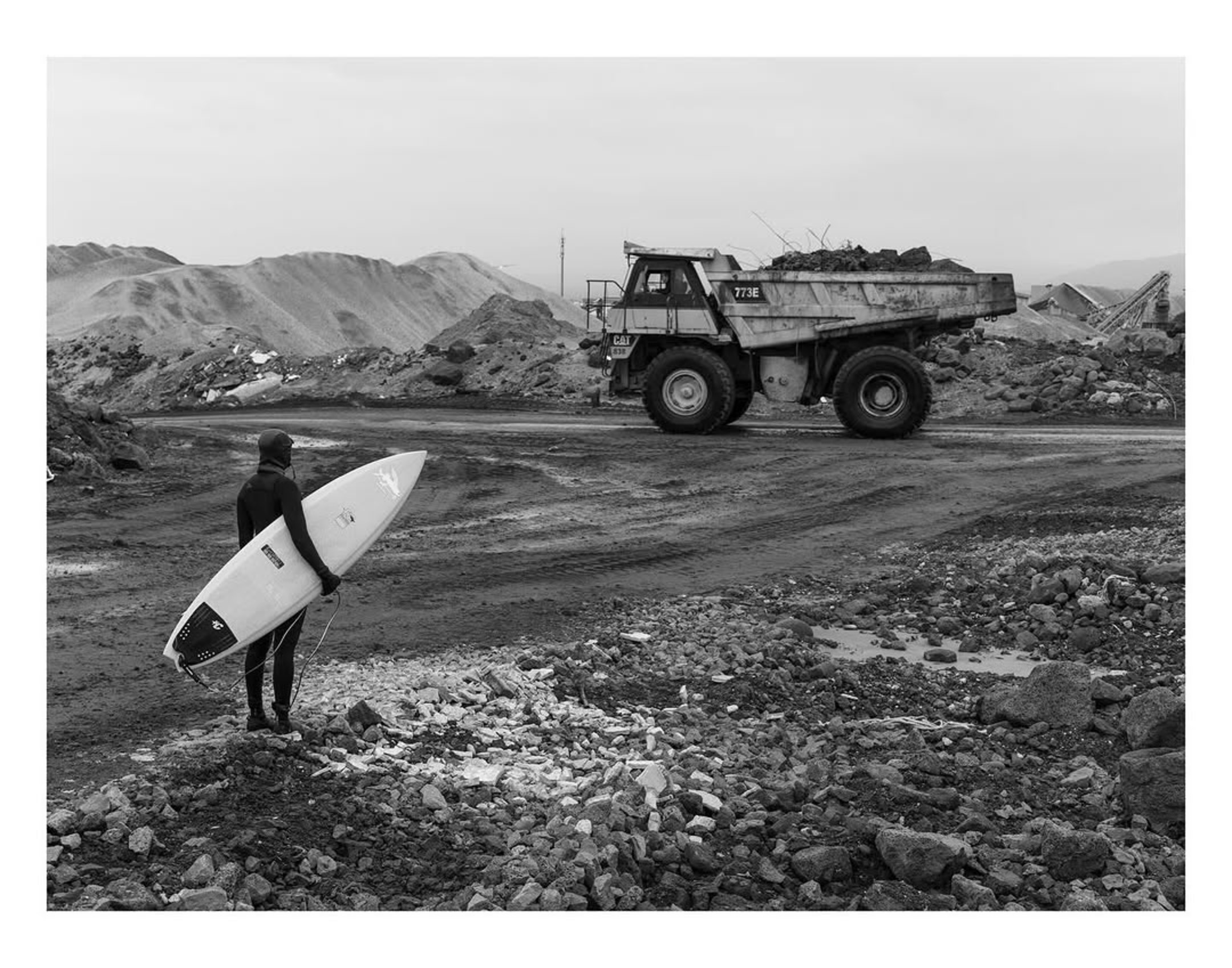
In that regard, this myopic line of thinking seems to be a recurring theme in how Iceland is being governed. This became clear with the demise of one of the best waves in Iceland by landfilling the iconic point break fiorlákshöfn (Thorli).
Thorli, Photo Elli Thor MagnussonThorli, Photo Nick Green
Iceland only holds a classroom or two of surfers. Even unionized under the Brimbrettafélag Íslands (BBFÍ, the Surf Association of Iceland), the most recent lawsuit didn’t stand a chance and the wave was lost. I managed to witness this with my own two eyes. Right now, it’s a matter of damage control. There’s still a bit of the wave left, but it’s more dangerous and nowhere near its former glory. “IT’S SHORT TERM VISION AND QUICK ECONOMIC GAIN FROM POLITICIANS CURRENTLY IN POWER,” BBFÍ board member Marc Zotes said over Instagram DMs when I recently shared about the current state of Thorli.
TEACHES OF PEACHES
Located in the Eastfjords, the town of Seyðisfjörður is home to about 650 people. It’s difficult to define what the vibe is like, but if you’ve ever played Stardew Valley, Animal Crossing: New Horizons, or explored every corner in Littleroot Town, you will understand exactly what I mean. It’s extremely neighborly and it breathes collectivism. Besides that, it’s also gorgeously located in the heart of a fjord. According to a survey done in 2023, about 75% of Seyðisfjörður is against open-net salmon farming—10% higher than the nation’s average—but why?
Sure, there’s the obvious reasons we’ve well discussed by now, but this isn’t the first time this town has had to deal with the effects of the commercial fishing industry. In fact, this town has been founded, and flourished, as a direct result of the Norwegian herring fishing industry. At its peak, Seyðisfjörður had about 1200 inhabitants, but when the herring disappeared in the 30s, the town fell into disrepair and people left. Then, when the herring returned in the 50s, the town blossomed again. Right up until the 1980’s when the cycle repeated itself and the population plummeted down from roughly 990 people to about 650. The commercial fishing industry hasn’t offered the consistency it needs for the livelihoods of its people. So, why would you want to repeat those cycles again with open-net salmon farming?
Sustainable tourism holds a brighter future for Seyðisfjörður. The residents are very well aware of this and are working hard to maintain their small community. There’s the Skaftfell Art Centre and the Lunga school, but Seyðisfjörður also offers incredible hikes and has the only international car ferry of the country. There’s history, heritage, beautiful buildings, and—to our luck—even the occasional karaoke night.
Too bad we left just before Ramón Navarro was up to annihilate Despacito. Luckily, we did witness him doing a stellar rendition of best-ever karaoke tune Tequila by the Champs—a duet with amazing twelve-year old Mathias Turgeon.
YOUR OWN GRASSROOTS ACTIVISM
“IT’S NOT TOO LATE. NATURE IS RESILIENT, BUT WE’RE CLOSE TO A POINT OF NO RETURN,” Jón told me during an after-karaoke Gin Tonic in a hotel lobby in the Eastfjords. “DECLINE IF THE SALMON IS FROM AN OPEN-NET SEA FARM, IF YOUR SEAFOOD IS BOTTOM-TRAWLED, OR IF IT’S UNCLEAR WHERE IT’S FROM IN THE FIRST PLACE. MOST OF THE TIME IT’S THE LATTER. I WAS IN JOURNALISM MYSELF BEFORE GETTING INVOLVED IN THIS EIGHT YEARS AGO. TALKING ABOUT IT, IN ANY WAY, SHAPE OR FORM, IS IMPORTANT.”
As salmon is still a luxury food, why not treat it as such? Go the extra mile when you order or buy it. Make it a thing. What you can do, if you even decide to eat it in the first place, is check or ask where the salmon is from: ‘Is it wild salmon?’ If you can’t say no, which can also happen, just talk about it.
Doing this asks for more transparency within the supply chain of salmon. This means chefs, restaurants, stores, and suppliers have to start giving a shit too. That in turn will hopefully influence fish farming companies to change practices and switch back to different, less disastrous, forms of farming that won’t endanger wild salmon populations, like the land pens.
Now, land pens still aren’t good for the fish as it’s exactly the same as with any type of bio industry, or in this case, aquaculture, but it does ensure some locals still have jobs, which is undeniably important in rural areas that still live off of fishing.
All of this keeps the wild salmon safe. That’s a big win and what this battle is all about. In the end, the best salmon is the one you didn’t eat, but if you do: go wild. Maybe even fish for it yourself.
Another way is to opt for sustainable tourism in Iceland. It boosts the livelihoods of local people and you get to enjoy everything Iceland has to offer in a more viable way. Especially in those remote areas in the Eastfjords and Westfjords. Either way, put your money where your mouth is. It makes a difference.